About Us
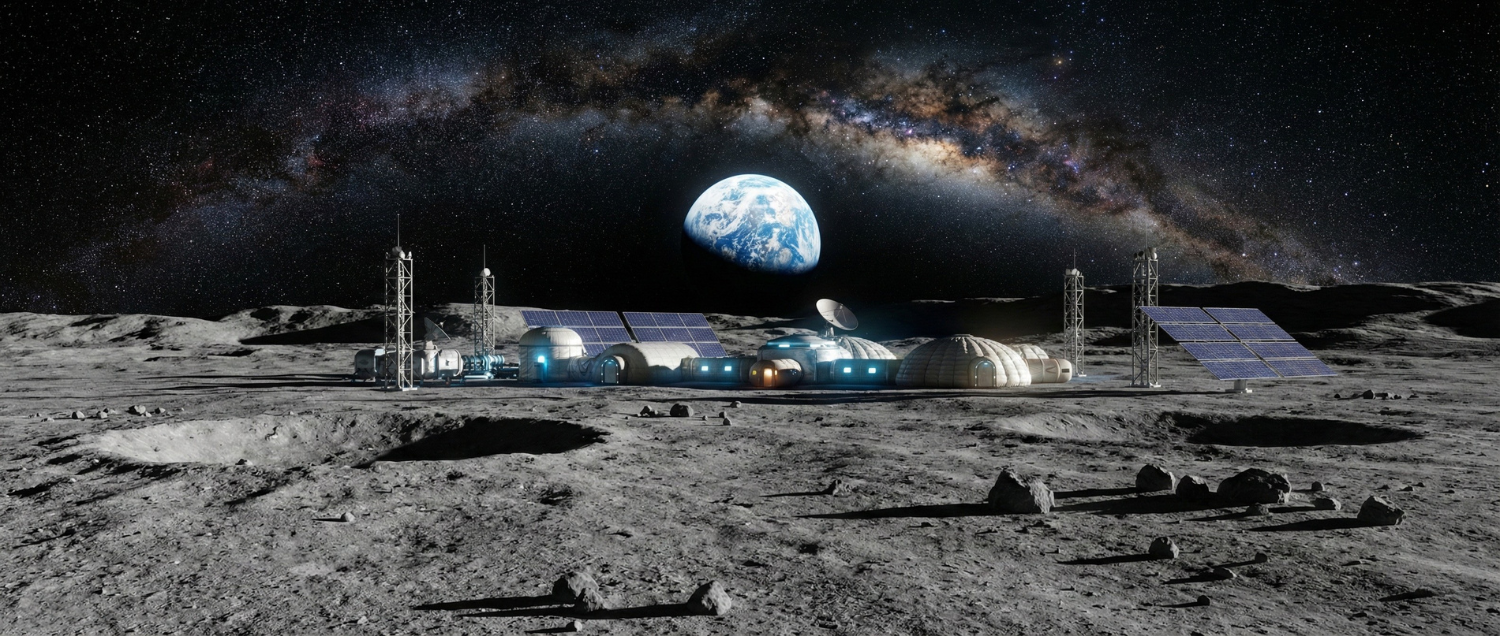
Our visionary path toward a future where every engineer on Earth can help build the Moon.
Empowering the next generation of lunar exploration by building the world's most reliable, open, and collaborative space engineering tools
Our Story

What inspired LunCo Founder Rod Mamin to build an open-source space engineering platform?
Rod Mamin spent years designing hardware for actual Moon missions, working on projects like the Asagumo rover at Spacebit and serving as Liberland Space Agency Program Director. Throughout his career, he witnessed firsthand how fragmented tools, trapped intellectual property, and proprietary systems were stifling innovation in space engineering.
The Challenge
The $1.8T space economy relies on an outdated, closed-source infrastructure that actively prevents global collaboration and efficiency.
- Fragmented & Costly Tools: Engineers waste most of their time on version-control hell, email chains, and translating files between 15+ disconnected tools.
- Trapped IP & Wasted Effort: Component designs are trapped. Teams spend billions reinventing basic parts because IP cannot be licensed, exchanged, or reused with verifiable ownership.
- The Valley of Death: The most innovative open-source hardware and DeSci projects die. They fit the slow-grant model (too slow) or the VC model (no IP moat).
The Opportunity
The lunar economy is projected to reach $170 billion by 2040, driven by renewed government interest (Artemis program), commercial ventures, and international competition. This creates an unprecedented opportunity for open-source solutions.
- Global Talent Pool: Millions of engineers, researchers, and enthusiasts worldwide want to contribute to space exploration but lack access to professional tools.
- Web3 Innovation: Blockchain technology now enables new models for IP protection, attribution, and monetization that make sustainable open-source hardware possible.
- Standardization Demand: As lunar missions multiply, the industry desperately needs interoperable standards to avoid fragmentation and enable collaboration.
- Proven Open-Source Success: From Linux to TensorFlow, open-source has consistently outpaced proprietary alternatives in software. The same can happen in space engineering.
Why Now?
Several technological and market forces are converging to make this the perfect moment for open-source lunar engineering:
Hardware Abundance
Starship & New Glenn drive launch costs to <$100/kg, ending the scarcity era. 450+ lunar missions are planned through 2035.
AI Training Demand
AI agents need physics-accurate digital twins. We provide the "gym" for this new AI space workforce.
DeSci Maturity
The $1B+ DeSci market proves on-chain mechanisms can fund via IP-NFTs and govern hard-tech and DAOs.
The Solution
LunCo's integrated ecosystem solves these challenges through three interconnected platforms:
- LunCoSim:Professional-grade simulation software that's open-source and user-friendly. Engineers can model lunar systems with the same accuracy as proprietary tools, but with zero licensing costs and full transparency.
- LORS (Lunar Open Rover Standard):A comprehensive standard for modular lunar robotics that enables interoperability and rapid prototyping. By launching a real rover to validate our standards, we prove that open-source space engineering works.
- CosmiFi:A Web3 marketplace where engineers can share blueprints as NFTs, maintaining IP rights while enabling composability. When someone builds on your work, you automatically receive attribution and royalties.
The Approach
- Open-Source First: All our core software is open-source, enabling transparency, community contributions, and trust. We believe the best engineering happens when everyone can see, modify, and improve the tools.
- Community-Driven Validation: We're not just publishing standards—we're proving they work by launching a real rover to the Moon. This community-funded mission will validate both our simulator and our standards.
- Standards-Driven Interoperability: LORS provides the common language that enables different teams and organizations to work together seamlessly, accelerating innovation through collaboration.
- Web3-Enabled Sustainability: By using NFTs and smart contracts, we solve the fundamental challenge of open-source hardware: how to reward contributors while maintaining openness.
- Professional Quality, Accessible Pricing: We refuse to compromise on quality. LunCo tools match or exceed proprietary alternatives in capability while being free and open to all.